Welcome to MyTower GTM
MyTower Global Trade Management (GTM) is a modular SaaS suite that covers customs, export control and regulatory compliance processes. This site documents what each module does, how the modules fit together, the underlying platform and how implementations are run.
The MyTower GTM Solution is composed of several modules to cover all processes of Global Trade Management. The modules can be used individually or in combination and are typically integrated with an existing Enterprise Resource Planning (ERP) and/or Transport Management System (TMS).
From a business process perspective, the solution supports all aspects of global trade which can be divided on a high level into Customs and Export Controls:
The objective of the Customs modules is to manage all trade master data and processes leading to the preparation of the customs declaration, profiting to the maximum possible from free trade agreements and other duty suspensions.
The objective of the Export Controls is to ensure full compliance with all import and export regulations, e.g. for dual use items, for drug precursors, for the protection of endangered species, animal derived products or any other legal constraints.
Within each of these two main areas, the software provides multiple modules, focused on particular aspects of the respective processes. Depending on the customer's priorities the modules can be put in place in an incremental approach to support a roadmap improving trade process efficiency, maximizing duty reduction and maintaining full trade compliance.
At the basis the software is supported by all required Trade Content like Free Trade Agreements and Rules of Origins, Classification systems, Tariffs, Sanction Party Lists, Embargoes or Export controls Regimes.
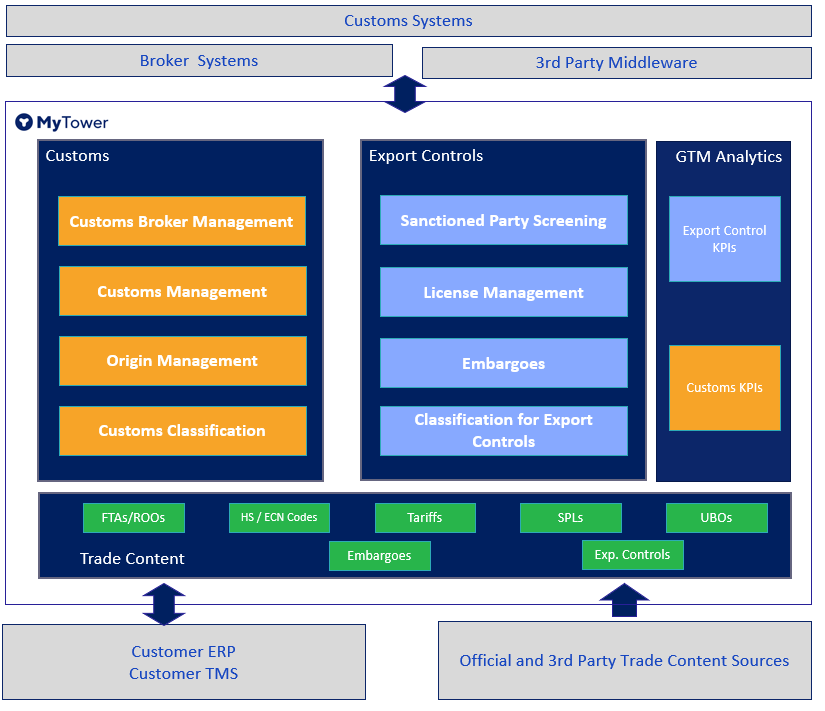
Figure 1. Overview of the MyTower GTM solution.
Modules
| # | Module | Domain |
|---|---|---|
| 1 | Customs Classification | Trade Master Data |
| 2 | Origin Management | Trade Master Data / Customs Optimization |
| 3 | Customs Procedure Management | Customs Operations |
| 4 | Customs Tracker / Bonded Warehouse | Customs Operations / Special Procedures |
| 5 | Customs Broker Management | Customs Operations / Broker Collaboration |
| 6 | Export Control Classification | Export Control / Trade Master Data |
| 7 | Transaction Screening | Export Control / Operational Compliance |
| 8 | License Management | Export Control / Authorization Management |
| 9 | Embargo Screening | Export Control / Country and Product Restrictions |
| 10 | Sanctioned Parties Screening | Export Control / Party Risk |
| 11 | Trade Compliance Tracker | Regulatory Compliance |
| 12 | Trade Compliance Portal | Regulatory Compliance / Collaboration |
| 13 | EUDR Compliance | Regulatory Compliance / Traceability |
| 14 | CBAM Compliance | Regulatory Compliance / Carbon Border Reporting |
| 15 | Forced Labor Compliance | Regulatory Compliance / Supply Chain Risk |
| 16 | Regulatory Watch and Trade Content | Reference Data / Compliance Intelligence |
| 17 | GTM Analytics | Analytics / Management Visibility |
| 18 | Collaboration, Document Management and Platform Services | Common Platform |
Common platform capabilities
All modules share a common platform, so capabilities such as workspaces, rules, collaboration and audit trail behave the same way across the suite.
| Capability | Description |
|---|---|
| Configurable workspaces | AG Grid-based views with filtering, bookmarks, export and line-level detail tabs. |
| Business rules engine | Customer-specific rules for routing, validation, status assignment, customs procedure selection and exception handling. |
| Collaboration | Requests, notifications and external access for suppliers, brokers, internal experts and customers. |
| Document management | Upload, download, version history, generated documents and audit-ready archiving. |
| Audit trail | History of status changes, user decisions, comments, data changes and screening/calculation results. |
| Role-based access control | Roles can limit views, actions, columns, data lines and detail tabs. |
| Integration layer | ERP/TMS/WMS/API/SFTP/file integration patterns with transformation and monitoring. |
| Analytics | Power BI-ready data structures and standard KPI adapters. |
How this documentation is organised
- Modules — one page per module: purpose, capabilities, detailed features, workflow and integrations.
- Platform — architecture, infrastructure, security and integration patterns shared by all modules.
- Implementation — the standard project methodology and module-specific implementation steps.
- Reference — reference content such as supported Free Trade Agreements and sanctions list coverage.